
Separation Anxiety in Relationships: Signs, Causes & Coping Tips
Clinically reviewed by Kiah Enriquez, LCSW

Separation anxiety in relationships is an intense, often irrational fear of being apart from a romantic partner: worrying they will leave you, be harmed, or stop loving you. It typically traces back to anxious attachment patterns formed in childhood, and it can be managed with self-soothing routines, gradual exposure to time apart, and professional relationship coaching.
Even if a picture of a crying child as parents leave for work is the first thing that pops into your mind when you hear the words separation anxiety, the feeling behind it might not seem so distant or childish to many people. People suffering from adult separation anxiety in relationships usually feel a strong and irrational fear they might lose a loved one, most frequently a romantic partner, in various ways. Those can include injury, accidents, illness, and death, or they may fear being broken up with or abandoned by the person they love.
The overwhelming fear of being away from people you love, particularly your partner, can be quite familiar to many adults in their closest relationships; most of us can think of at least a few examples of having felt this way. While it’s perfectly normal to occasionally feel lonely when you’re away from your partner, in some cases, these feelings get out of control and can cause severe distress and pain. This is a clear sign you may be suffering from separation anxiety in relationships.
How Do I Know If I Have Separation Anxiety in Relationships?
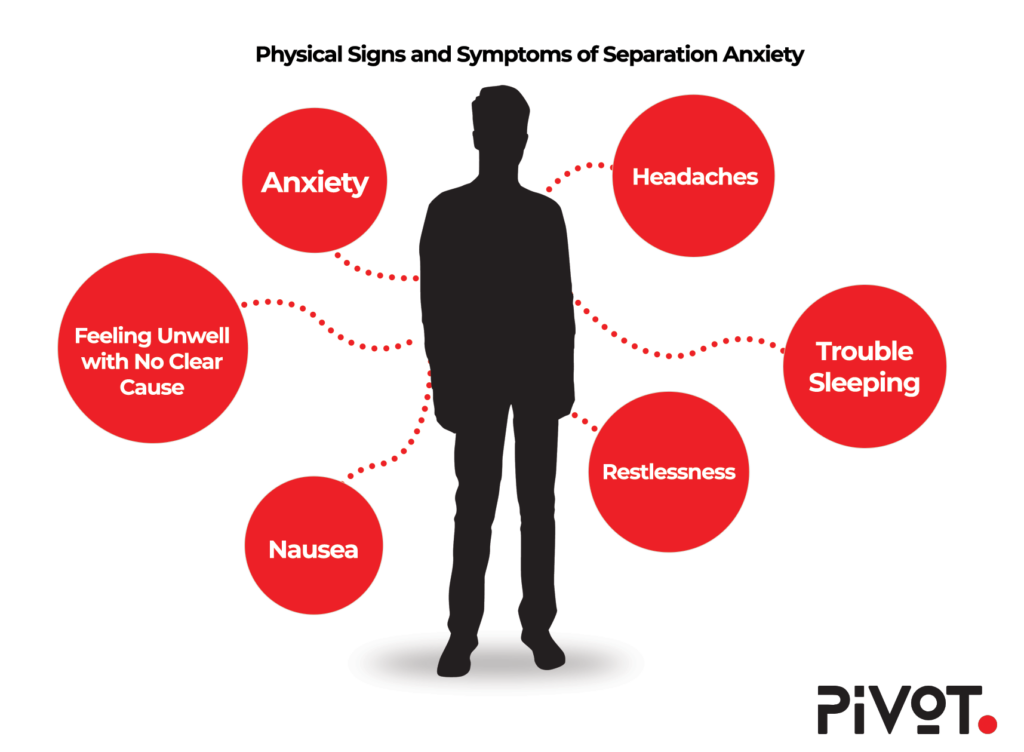
Everyone feels a twinge of discomfort when parting from loved ones. For some, the mere idea sparks intense fear, panic, or overwhelming distress. In adults, this can manifest as separation anxiety, where emotional and physical symptoms (like intrusive negative thoughts, constant worrying, a racing heart, or even nausea at the thought of being apart) stem from deep-seated fears of abandonment. These reactions are often linked to anxious attachment styles in attachment theory, a framework developed by psychologist John Bowlby. This framework explains how early bonds with caregivers shape our responses to separation and closeness in relationships. For instance, if childhood needs were met inconsistently, it can lead to patterns like obsessively seeking reassurance or feeling an urgent need to stay connected, heightening distress during even brief separations.
The clinical tie here comes from Bowlby's work, which highlights how insecure attachments can lead to heightened anxiety during separations. People with anxious styles crave constant reassurance to avoid perceived rejection. For more on this, check out this peer-reviewed review of adult attachment and romantic relationships.
Separation anxiety is not equally serious in all cases. It can be mild for some, while others may experience overwhelming levels of stress and anxiety, preventing them from the most basic functioning in their everyday lives. If you’ve been living with these feelings, you might not even realize something is wrong.
You may be suffering from separation anxiety in your relationship if:
- You feel unfounded and excessive worry and fear that people you love might disappear from your life, leave you, or pass away.
- You refuse to be away from your loved ones and experience severe distress if you do.
- You have difficulty sleeping when you’re away from your partner and feel extreme fear that something bad might happen to them.
- You experience frequent depression or anxiety episodes or have panic attacks if separated from your loved one for a period of time. Just thinking about being away from them can trigger strong negative emotions.
- Your daily commitments, work, parenting, self-care, etc., are compromised. This can be due to your fear of being away from loved ones, crippling your productivity and decision-making skills.
If this sounds like you, you aren’t alone, and you aren’t stuck. The first step in healing separation anxiety in relationships is understanding where it comes from. Our five-day Glass House retreat can help you explore how your past relationships and environment made you feel unstable and fearful in your connections. This soul-searching work must be done in order to build healthier coping skills and heal your relationships.
Symptoms of Separation Anxiety From a Boyfriend, Girlfriend, or Spouse
If you struggle with separation anxiety tied to a boyfriend, girlfriend, or spouse, the signs usually show up whenever you’re apart. You might feel an intense, irrational fear that something bad will happen to them, have difficulty sleeping when they’re away, or go through panic attacks and depression episodes during time apart. Physical symptoms (a racing heart or nausea at the mere thought of separation) are common too, along with a constant urge to seek reassurance and stay connected. These reactions are often linked to an anxious attachment style, and recognizing them is the first step toward building healthier, more secure bonds.
What Can Cause Separation Anxiety in Relationships?
The most common causes of separation anxiety in relationships are codependency, a history of rejection or abandonment, childhood attachment wounds, and stressful life changes.
The causes of separation anxiety can be divided into several categories. Children of parents suffering from anxiety are more likely to experience it both as children and as grownups. Adults who are already diagnosed with generalized anxiety disorder can often experience separation anxiety as one of the many manifestations of this type of disorder. Environmental factors and various stressors experienced later in life can also play a role in developing separation anxiety.
| Common Causes of Separation Anxiety in Adults | |
| Codependency | Codependency in a romantic relationship and putting your partner’s needs above your own can create anxiety for both you and your partner. |
| History of rejection | A history of rejection or abandonment in previous relationships can cause you to constantly worry it will happen again. |
| Childhood attachment issues | Childhood neglect, abandonment, or other attachment issues can create deep-seated anxieties later in life. |
| Stressful environments | Adverse environmental conditions or stressful changes are destabilizing and can create an atmosphere for anxiety to grow. |
Life stressors, like job changes, financial strain, or major transitions, can amplify relationship insecurity, intensifying separation anxiety. For example, if you’ve experienced a sudden breakup in the past, your brain might wire itself to anticipate loss, heightening distress even during short separations from a partner. This hypervigilance often stems from an anxious attachment style, where fear of abandonment becomes a lens for interpreting everyday challenges.

What Are the Negative Effects of Separation Anxiety on Your Relationship?
Separation anxiety is most obvious in romantic relationships, which inherently makes people feel vulnerable and exposed. An anxious attachment style, which can develop during early childhood, can also amplify feelings of separation anxiety in romantic relationships. Being intimate with someone and opening up to them may also mean revisiting a lot of suppressed emotions, including those from early childhood. When people are unaware of the underlying causes of their separation anxiety issues, it can cause a wide range of problems in romantic relationships.
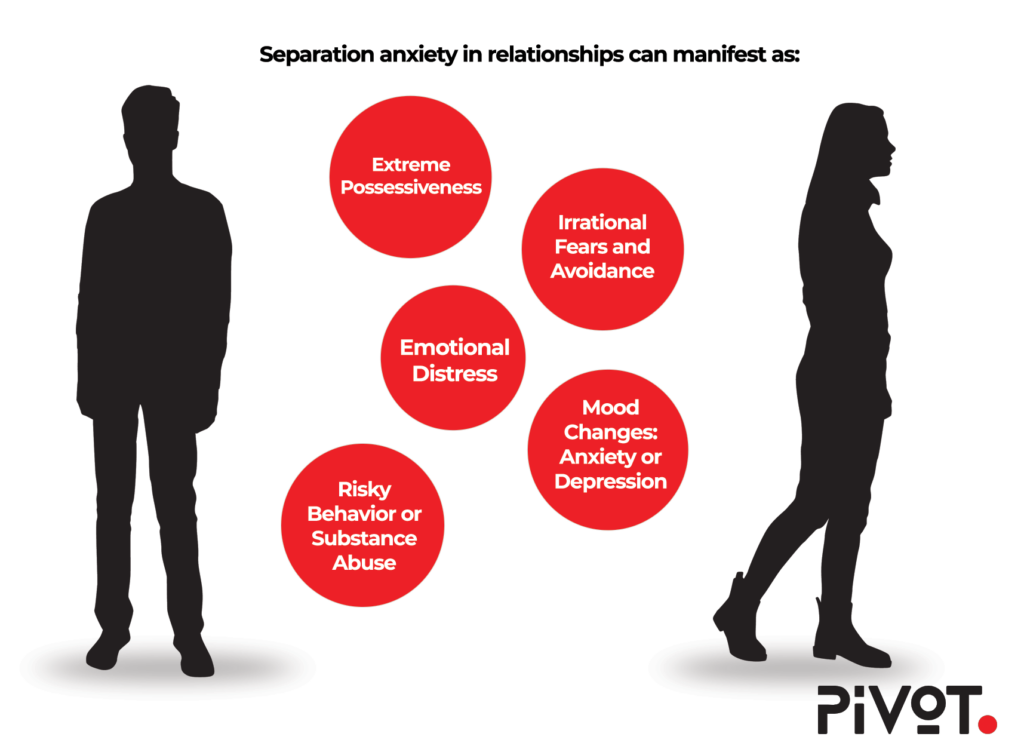
There are, of course, cases when separation anxiety isn’t completely unfounded. People who enter romantic relationships with partners with avoidant attachment styles may be particularly susceptible to these issues.
Behaviors by love-avoidant people can make the situation worse, as those individuals crave independence and self-reliance. Love-avoidant individuals don’t feel comfortable relying on others or having others depend on them, so they tend to push their romantic partners away, easily triggering separation anxiety in the other partner.
Learn Coping Strategies for Relationship Separation Anxiety
To deal with separation anxiety in a relationship, start with three practical habits rooted in psychology: a self-soothing routine, gradual exposure to time apart, and mindfulness exercises.
If you recognize some of the behaviors and feelings in yourself or a partner, you might benefit from learning coping strategies to manage separation anxiety in your relationships. While learning how to deal with such feelings requires some effort, professional guidance is available to help you make healthy attachments.
Managing separation anxiety involves developing healthy habits and activities that can alleviate feelings of anxiety when apart from your partner. Here are a few practical tips rooted in psychology to start building comfort with independence and reduce fear of abandonment:
- Build a self-soothing routine: Create personal rituals, such as journaling positive affirmations or engaging in hobbies that boost self-esteem, to counteract distress during time apart. This strengthens your inner resilience, making it easier to maintain secure bonds without constant reassurance.
- Practice gradual exposure: Begin with short, low-stakes separations, like 30-minute solo outings or errands without your partner. Over time, this helps rewire anxious responses by showing your brain that being apart doesn't lead to loss, fostering a sense of security in the relationship.
- Incorporate mindfulness exercises: When fear of rejection or panic bubbles up, try deep breathing techniques: inhale for four counts, hold for four, exhale for four. This grounds you in the present, interrupting cycles of obsessive worrying and promoting emotional regulation, often linked to anxious attachment styles from attachment theory.
Seek Professional Help
You can make the first step through PIVOT coaching sessions or retreats at the Glass House. Our experienced and caring relationship coaches can help you recognize and change unhealthy thoughts and behavior patterns, which can, in turn, make you better equipped to deal with your romantic relationship issues.
When you work with us, we can help you explore your and your partner’s attachment styles, communication patterns, and past traumas that are influencing your current relationship. We work with individuals and couples, both separately and together, to heal their connections and move forward in a healthier way.
Frequently Asked Questions About Separation Anxiety in Relationships
Mild worry or a sense of missing your partner during time apart is a common human response, rooted in our natural need for connection. However, when it escalates to intense fear of abandonment, constant distress, or interference with daily life, it may signal deeper relationship insecurity or anxious attachment styles that warrant attention.
Missing a loved one involves temporary sadness or longing that doesn't overwhelm your functioning, often easing with communication or distraction. Separation anxiety, on the other hand, brings irrational panic, physical symptoms like nausea or racing heart, and obsessive thoughts about loss, often stemming from past traumas or unresolved fears that amplify distress even in secure partnerships.
Many people start by building self-awareness through habits like mindfulness or gradual exposure to independence, which can reduce symptoms over time. That said, if it's tied to underlying issues like childhood experiences or attachment theory patterns, professional guidance, such as coaching, often accelerates healing and prevents it from straining your bond.
Attachment styles, formed in early childhood, heavily influence how we handle closeness and separation; for instance, an anxious style can heighten fears of rejection or abandonment, making time apart feel threatening. Understanding yours through reflection or support can shift these patterns toward secure attachments, fostering healthier responses in romantic relationships.
Common signs include excessive worry that something bad will happen to your partner or that they might leave, severe distress or trouble sleeping when you’re apart, panic or depression episodes triggered by separation, and physical symptoms like a racing heart or nausea. Daily commitments such as work, parenting, and self-care can also suffer.
Practical coping strategies include building a self-soothing routine (journaling positive affirmations, hobbies that boost self-esteem), practicing gradual exposure through short, low-stakes separations, and using mindfulness techniques like counted breathing when panic rises. Professional support, such as relationship coaching, can help these habits stick.
Unmanaged separation anxiety can put real strain on a relationship: constant worry, reassurance-seeking, and distress during time apart create problems for both partners, and pairings with a love-avoidant partner often intensify the cycle. With self-awareness and support, many people build healthier coping patterns and more secure connections.
Transform Your Relationships With PIVOT
PIVOT offers relationship coaching for individuals, duos, couples, and families, as well as business coaching and retreats. Reach out online or call us to begin the journey to a healthier, happier life where you no longer have separation anxiety in relationships.